Ready to Work Together? Build a project with us!
Urbans Contractor INC provides structural integrity law repair services for condo associations, co-op boards and property managers in Fort Lee, NJ. Fort Lee is Bergen County’s high-rise condominium corridor at the George Washington Bridge, where many older co-op and condo towers stand beside newer high-rise buildings. When a building here falls under the law, the work moves into a repair phase.
We don’t perform the mandated inspections — we execute the repairs your engineer’s report and reserve study call for. A New Jersey-licensed Professional Engineer inspects and reports; Urbans scopes, phases and builds the corrective work that report identifies, so boards can move from findings to finished repairs with a clear plan. Common scopes include concrete restoration, masonry and brick work, facade work, parapet and balcony repairs, and waterproofing.
That work is planned around occupied high-rise buildings, board approvals and reserve budgets, in coordination with the association’s own engineer. If your Fort Lee board is holding a report, contact us for a free consultation on scope, phasing and timing.
New Jersey’s Structural Integrity Law, S2760/A4384 (P.L. 2023, c.214), was signed on January 8, 2024, following the Surfside collapse. It sets inspection and reserve-study requirements for certain residential condominium and cooperative buildings. In Fort Lee, that framework applies most directly to the borough’s high-rise condo and co-op towers, where a single report can cover a tall building, its podium and its parking areas.
Covered buildings are residential condos and co-ops with concrete, masonry, steel or hybrid load-bearing systems, including podium decks. Inspections under the law are performed ONLY by New Jersey-licensed Professional Engineers, working under ASCE protocols, and reports are filed with the municipal construction official. The law also mandates capital reserve studies, so Fort Lee associations plan financially for major work. A fuller statewide explanation is on our Structural Integrity Law Contractors in New Jersey page.
Reports commonly identify facade deterioration, concrete spalling, masonry damage, parapet defects, balcony problems, steel reinforcement needs, and waterproofing failures. Urbans does not perform those inspections or sign those reports; we carry out the repairs the reports identify.
On timing, buildings that were 15 or more years old when the law took effect had their first inspection due by January 8, 2026. That date is now past. Re-inspections are required every 10 years for buildings under 20 years old and every 5 years for buildings 20 years old or older. An inspection is also required within 60 days of observable damage to the load-bearing system. Capital reserve studies then set out the 30-year funding picture for that major work.
We repair spalled, cracked and deteriorated concrete in Fort Lee high-rise buildings identified in your engineer's report, restoring damaged sections so the structure and its protective cover are put back in sound condition.
Cracks in walls, slabs and load-bearing elements in Fort Lee towers are repaired according to the findings in the report, so the repair addresses the cause the engineer documented rather than only the surface.
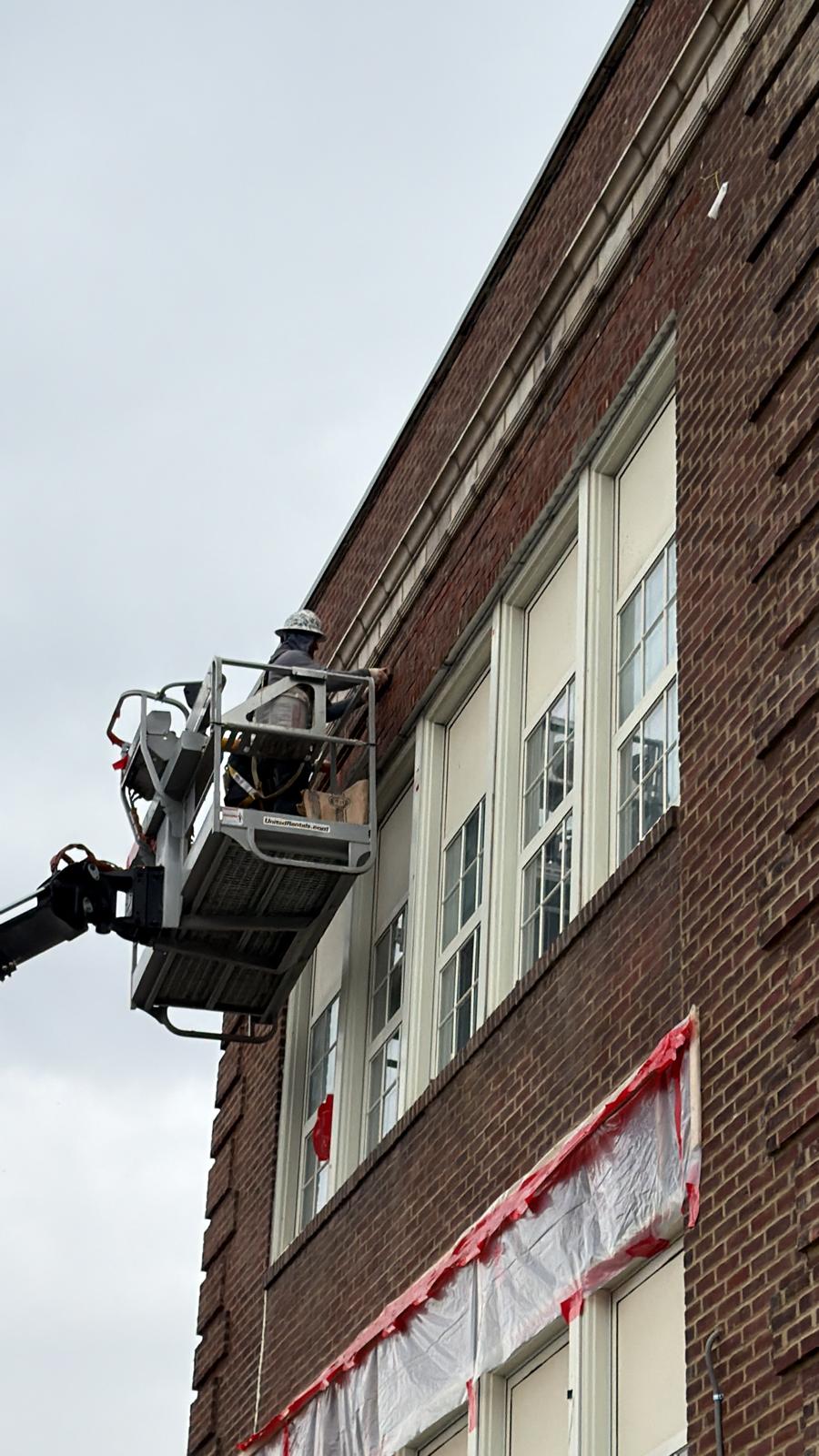
Damaged brick and masonry on Fort Lee condo and co-op buildings are repaired or replaced where the inspection found deterioration, keeping the facade weather-tight and structurally sound.
Failed mortar joints in Fort Lee buildings are raked out and repointed, restoring the masonry's bond and weather resistance so water stops working its way into the wall.
Facade deterioration flagged in the report is restored on Fort Lee high-rises, including cracked surfaces, damaged masonry and failed sealants, so the building envelope is put back in sound condition.
Parapet defects are a common report finding in Fort Lee's older multi-family towers. We repair or rebuild parapet walls where they are cracked, leaning or deteriorated, restoring safety at the roofline.
Balcony slabs, railings and connection points on Fort Lee high-rise towers are repaired where inspections find deterioration, drainage problems or loose fixings, so balconies stay safe to use.
Where reports call for structural steel work in Fort Lee buildings, we install or repair reinforcement that supports load-bearing elements and restores the strength the engineer specified.
Waterproofing failures flagged in Fort Lee reports are corrected with membranes, coatings and joint sealants that keep water out of facades, balconies and podium decks.
Podium decks and parking decks under Fort Lee towers, which the law expressly covers, are repaired where concrete, drainage and waterproofing have deteriorated, so residents keep safe access and parking.
Reserve-study line items for Fort Lee buildings are turned into phased construction projects, sequenced around board approvals and reserve budgets so large capital work moves forward in planned stages.
Once repairs are complete, ongoing maintenance programs help Fort Lee associations look after the restored work, catching small problems early and keeping the building ready for its next inspection cycle.
If you are searching for structural integrity law contractors near me in Fort Lee, NJ, you are most likely a condo association, co-op board or property manager holding an engineer’s report, or preparing a reserve-study capital project for a high-rise tower near the George Washington Bridge. Fort Lee’s older co-op and condo towers, standing beside newer high-rises, make the repair phase a job that has to be planned around residents and board approvals. Fort Lee is also listed among the towns on our service areas page.
We work with Fort Lee associations that already have a report and need a contractor to turn its findings into finished work. The sequence usually runs from the report to a scoped repair plan, then to phased construction, and on to documented completion that the board can keep on file. The same approach applies to reserve-study capital projects and to buildings in neighbouring Bergen County towns.
After the report, the work often includes brick pointing and repointing, exterior and balcony repairs, and annual inspection and maintenance plans once the restoration is complete. Contact us for a free consultation about the repair phase for your Fort Lee building.
Choosing a contractor for the repair phase is different from choosing an inspector. Urbans is on the building side of that divide: we do not perform S2760 inspections, sign engineering reports or produce reserve studies. Our job is to take the findings an engineer has already documented for a Fort Lee tower and turn them into completed, well-sequenced repairs that boards can explain to residents and record for the future.
That focus shapes how we work. Scopes follow the report, phasing follows the building and the budget, and completed work is documented so the association has a clear record of what was done. Fort Lee boards get a free consultation to discuss the report and the likely repair sequence.
Work starts from the findings the engineer documented for the Fort Lee building, not from a general checklist. That keeps the scope tied to what the report actually requires, and makes it easier for the board to explain each item to residents.
Repairs in an occupied Fort Lee high-rise are sequenced around residents, common areas, board approvals and reserve budgets. Phasing lets urgent items move first while larger capital work is scheduled in stages the association can fund and approve.
We work alongside the Fort Lee association’s own engineer during the repair phase, so questions about scope or sequence can be resolved with the professional who wrote the report. Urbans does not inspect, sign or file engineering reports.
Completed work is documented for the Fort Lee association’s records, giving boards a clear account of what was repaired, in what order and under which phase. That record supports future reserve planning and the next inspection cycle.
Urbans Contractor INC operates with a performance-focused mindset, combining field expertise, structured oversight, and accountable execution to deliver dependable construction and renovation outcomes across every project scope.
Our responsibility continues after project delivery, offering practical guidance and long-term durability solutions when needed.
Every assignment is supported by detailed scheduling, material coordination, and quality verification processes to maintain consistency and reduce risk.
With hands-on experience in exteriors, restoration, roofing, concrete, and interiors, we deliver solutions aligned with technical standards and your property goals.
Explore our completed construction and renovation projects, showcasing quality workmanship, structural expertise, and disciplined project management across residential and commercial properties.
New Jersey’s Structural Integrity Law, S2760/A4384 (P.L. 2023, c.214), was signed on January 8, 2024, following the Surfside collapse. It requires inspections of covered residential condo and co-op buildings with concrete, masonry, steel or hybrid load-bearing systems, including podium decks. For Fort Lee, that means many high-rise towers fall under the law. The law also mandates capital reserve studies, so associations must plan financially for the work their buildings will need.
No. S2760 inspections may only be performed by New Jersey-licensed Professional Engineers, working under ASCE protocols, and their reports are filed with the municipal construction official. A contractor cannot sign or file an engineering report. Urbans Contractor INC performs the repair work the report identifies for Fort Lee buildings, working alongside the association’s engineer.
Once the report lands, the engineer has identified the deficiencies and the association must complete the corrective work in the engineer’s timeframe. Urbans scopes, phases and executes those repairs, working around occupied high-rise buildings, board approvals and reserve budgets. Completed work is documented for the association’s records, and we coordinate with the association’s engineer throughout the repair phase.
Buildings that were 15 or more years old when the law took effect had their first inspection due by January 8, 2026, a date now past, so many Fort Lee associations are already holding reports with required repairs. Re-inspections follow every 10 years for buildings under 20 years old and every 5 years for buildings 20 years or older. An inspection is also required within 60 days of observable damage to the load-bearing system.
Capital reserve studies identify the major repair and replacement items a Fort Lee building will face, and those line items become phased construction projects. Urbans helps boards turn reserve-study items into a workable sequence, grouping work into phases that fit association budgets and approval cycles. Urgent repairs come first while larger capital work is planned in stages, with ongoing care through annual inspection and maintenance plans.