Ready to Work Together? Build a project with us!
Urbans Contractor INC works with condo associations, co-op boards and property managers in Long Branch, a Monmouth County shore city whose oceanfront is lined with older condominium high-rises and co-op buildings. In that setting, salt air and storms can accelerate concrete and facade deterioration, so an engineer’s findings often point to envelope, balcony and concrete work that needs careful sequencing around residents.
We don’t perform the mandated inspections — we execute the repairs your engineer’s report and reserve study call for. A New Jersey-licensed Professional Engineer inspects and reports; Urbans scopes, phases and builds the corrective work that report identifies, so a board can move from findings to finished repairs with a clear plan. Typical scopes include concrete restoration, masonry and brick work, facade work, parapet and balcony repairs, and waterproofing.
That work is planned around occupied shore buildings, board approvals and reserve budgets. We coordinate with the association’s own engineer, sequence work to limit disruption for residents, and document completed work for the association’s records. If your Long Branch board is holding a report and deciding what comes next, contact us for a free consultation to talk through the repair scope, phasing and timing.
New Jersey’s Structural Integrity Law, S2760/A4384 (P.L. 2023, c.214), was signed on January 8, 2024. It sets inspection and reserve-study requirements for certain residential condominium and cooperative buildings, so structural deterioration is identified before it becomes a safety problem — a concern that carries extra weight for older oceanfront buildings exposed to salt air and storms.
Covered buildings are residential condos and co-ops with concrete, masonry, steel or hybrid load-bearing systems, including podium decks. Inspections under the law are performed ONLY by New Jersey-licensed Professional Engineers, working under ASCE protocols, and reports are filed with the municipal construction official. The law also requires capital reserve studies, so associations plan financially for major repair and replacement work over a 30-year horizon, rather than reacting only when damage appears.
Reports commonly identify facade deterioration, concrete spalling, masonry damage, parapet defects, balcony problems, steel reinforcement needs, and waterproofing failures. Urbans does not perform those inspections or sign those reports; we carry out the repairs the reports identify.
On timing, buildings that were 15 or more years old when the law took effect had their first inspection due by January 8, 2026. That date is now past, and many Long Branch associations are holding reports with required repairs. Re-inspections are required every 10 years for buildings under 20 years old and every 5 years for buildings 20 years old or older. An inspection is also required within 60 days of observable damage to the load-bearing system.
We repair spalled, cracked and deteriorated concrete identified in your engineer's report, restoring strength and protecting oceanfront buildings from further salt-air damage.
Cracks in walls, slabs and load-bearing elements are repaired according to the findings in the report, with attention to the movement and moisture exposure common in shore buildings.
Damaged brick and masonry are repaired or replaced where the inspection found deterioration, keeping Long Branch facades sound against wind-driven rain and salt air.
Failed mortar joints are raked out and repointed, restoring the masonry's bond and weather resistance against wind-driven rain and salt air.
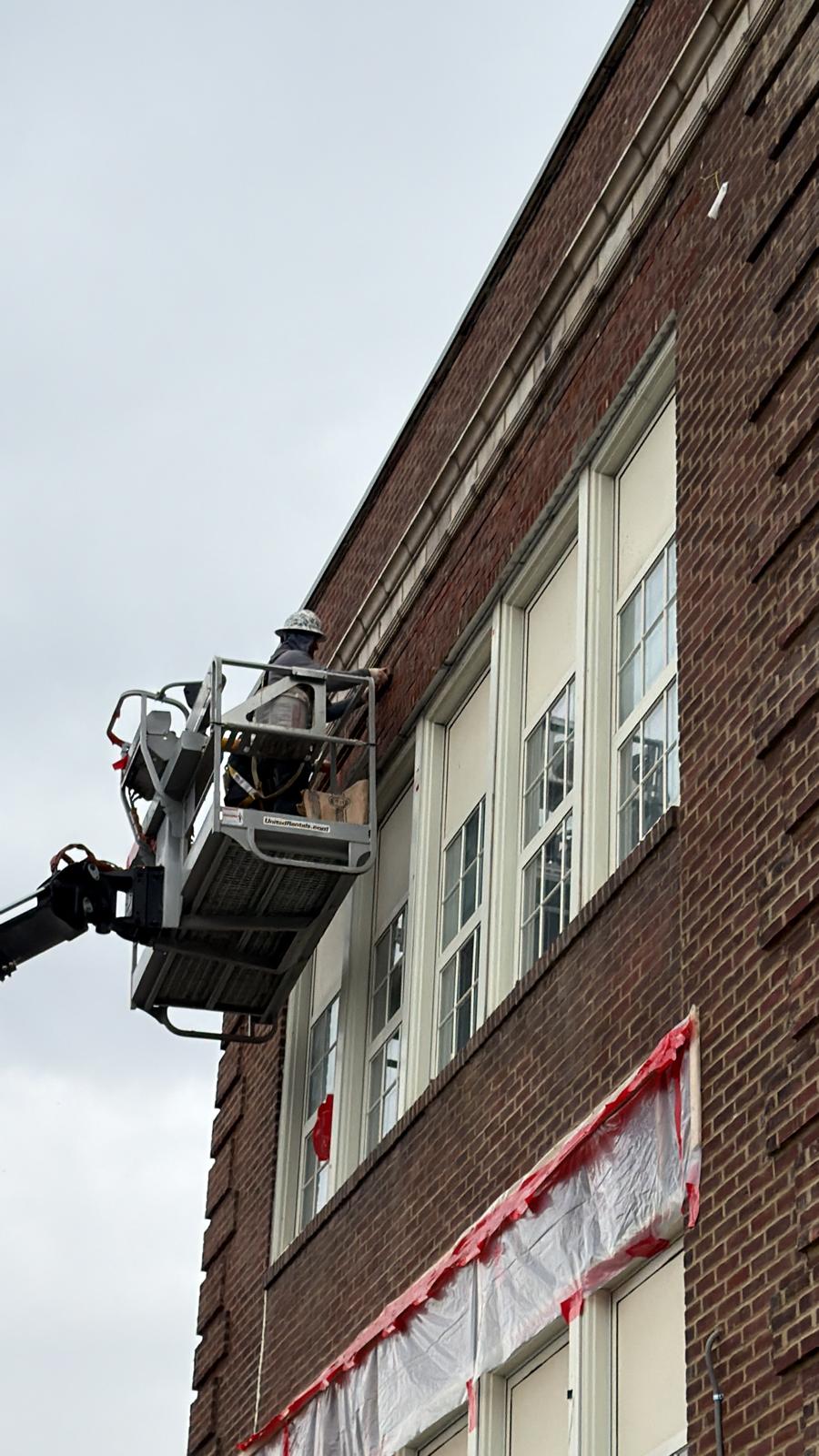
Facade deterioration flagged in the report is restored, including cracked surfaces, damaged masonry and failed joints, so the building envelope stands up to coastal weather.
Parapet defects are a common report finding. We repair or rebuild parapet walls where they are cracked, leaning or water-damaged, protecting the roof edge and the wall below.
Balcony slabs, railings and connection points are repaired where inspections find deterioration, drainage problems or corrosion — a frequent concern on oceanfront high-rises.
Where reports call for structural steel work, we install or repair reinforcement that supports load-bearing elements, including corroded steel exposed to coastal moisture.
Waterproofing failures flagged in reports are corrected with membranes, coatings and joint sealants suited to a coastal exposure, keeping water out of concrete and masonry.
Podium decks and parking decks, which the law expressly covers, are repaired where concrete, drainage or waterproofing has deteriorated under heavy use and weather exposure.
Reserve-study line items are turned into phased construction projects, sequenced around board approvals, reserve budgets and occupied buildings on the Long Branch oceanfront.
Once repairs are complete, ongoing maintenance programs help associations look after the restored work and stay prepared for the next inspection cycle.
If you are searching for structural integrity law contractors near me in Long Branch, NJ, your association may already be holding an engineer’s report, or preparing for a reserve-study project. Urbans Contractor INC works with condo and co-op associations, boards and property managers in Long Branch, and we work alongside the association’s own engineer throughout the repair phase. For the statewide picture, see our New Jersey structural integrity law repairs page.
Reserve-study capital projects begin as line items in a study and become phased construction projects in real buildings. We help boards turn those line items into a workable sequence: what needs to be done first, what can be grouped into a later phase, and how the work fits within association budgets and approval cycles. Phasing matters in Long Branch because residents stay in place, common areas stay in use, and funding is usually released in stages rather than all at once.
After the report lands, the sequence is straightforward: the engineer identifies deficiencies, the association must complete the corrective work in the engineer’s timeframe, and Urbans scopes, phases and executes those repairs. That includes brick pointing and repointing where mortar has failed, exterior and balcony repairs where the envelope or balcony system is affected, and the concrete, masonry, parapet and waterproofing work the report calls for. For ongoing care once repairs are complete, our annual inspection and maintenance plans help associations stay on top of routine upkeep. We serve Monmouth County shore communities, including Asbury Park structural integrity law contractors to the south and Freehold structural integrity law contractors at the county seat, and you can see all of our coverage on our service areas page.
Choosing a contractor for the repair phase is different from choosing an inspector. Urbans is on the repair side of the line: we do not perform S2760 inspections, sign or file engineering reports, or produce reserve studies. What we do is turn your engineer’s documented findings for a Long Branch building into completed, well-sequenced repairs, with a free consultation to talk through the scope and phasing before work begins.
Work starts from the findings the engineer documented, not from a general checklist. That keeps the scope tied to the report and the reserve study, so boards can see exactly which deficiencies are being addressed and why.
Repairs are sequenced around residents, common areas, board approvals and reserve budgets. Phasing matters especially in occupied oceanfront buildings, where balconies, lobbies and parking areas are in daily use and funding is released in stages.
We work alongside the association’s own engineer during the repair phase, so questions about scope and method can be checked against the report rather than guessed at. That keeps the repair work aligned with what the engineer specified.
Completed work is documented for the association’s records, giving boards a clear account of what was done, where and when. That documentation supports future inspections and reserve planning.
Urbans Contractor INC operates with a performance-focused mindset, combining field expertise, structured oversight, and accountable execution to deliver dependable construction and renovation outcomes across every project scope.
Our responsibility continues after project delivery, offering practical guidance and long-term durability solutions when needed.
Every assignment is supported by detailed scheduling, material coordination, and quality verification processes to maintain consistency and reduce risk.
With hands-on experience in exteriors, restoration, roofing, concrete, and interiors, we deliver solutions aligned with technical standards and your property goals.
Explore our completed construction and renovation projects, showcasing quality workmanship, structural expertise, and disciplined project management across residential and commercial properties.
New Jersey’s Structural Integrity Law, S2760/A4384 (P.L. 2023, c.214), was signed on January 8, 2024. It requires inspections of certain residential condominium and cooperative buildings and capital reserve studies for those buildings, so deterioration is found early and funded over a 30-year horizon. For Long Branch, the law matters most for older oceanfront condo high-rises and co-ops, where salt air and storms accelerate concrete and facade deterioration.
No. S2760 inspections may only be performed by New Jersey-licensed Professional Engineers, working under ASCE protocols, and reports are filed with the municipal construction official. Urbans does not perform those inspections or sign those reports. We don’t perform the mandated inspections — we execute the repairs your engineer’s report and reserve study call for.
Once the report lands, the engineer has identified the deficiencies and the association must complete the corrective work in the engineer’s timeframe. Urbans scopes, phases and executes those repairs — concrete, masonry, facade, parapet, balcony, steel and waterproofing work — working alongside the association’s own engineer. Completed work is documented for the association’s records.
Buildings that were 15 or more years old when the law took effect had their first inspection due by January 8, 2026. Re-inspections are required every 10 years for buildings under 20 years old and every 5 years for buildings 20 years old or older. An inspection is also required within 60 days of observable damage to the load-bearing system.
Capital reserve studies identify the major repair and replacement items a building will face, and the funding needed over a 30-year horizon. Urbans turns those line items into phased construction projects, sequenced around board approvals and reserve budgets, so the most urgent work is done first and the rest is planned rather than deferred. For a free consultation about your building’s repair phase, contact us.