Ready to Work Together? Build a project with us!
Urbans Contractor INC works with Montclair condo associations, co-op boards and property managers on the repair phase that follows a structural integrity inspection. Montclair, an Essex County township, has a substantial stock of older multi-family, condominium and co-op buildings alongside its historic homes, and for many of those buildings an inspection report is the starting point, not the end of the work.
We don’t perform the mandated inspections — we execute the repairs your engineer’s report and reserve study call for. A New Jersey-licensed Professional Engineer inspects and reports; Urbans scopes, phases and builds the corrective work that report identifies, so a Montclair board can move from findings to finished repairs with a clear plan. Common scopes include concrete restoration, masonry and brick work, facade work, parapet and balcony repairs, and waterproofing.
That work is planned around occupied Montclair buildings, board approvals and reserve budgets. We coordinate with the association’s own engineer, sequence work to limit disruption for residents, and document completed work for the association’s records. If your board is holding a report and deciding what comes next, contact us for a free consultation to talk through the repair scope, phasing and timing.
New Jersey’s Structural Integrity Law, S2760/A4384 (P.L. 2023, c.214), was signed on January 8, 2024, in the wake of the Surfside condominium collapse. It sets inspection and funding duties for covered condominium and co-operative buildings, and it is the law behind the repair work described on this page. For the statewide background, see our structural integrity law contractors in New Jersey page.
A covered building is generally a condo or co-op with a concrete, masonry, steel or hybrid load-bearing system. Inspections under the law may only be performed by a New Jersey-licensed Professional Engineer, following accepted engineering protocols, with reports filed with the municipal construction official. The law also requires capital reserve studies that look ahead 30 years and fund the major repair and replacement items those studies identify, so a Montclair association’s budget and its repair program are closely linked.
Reports commonly identify facade deterioration, parapet defects, steel reinforcement needs and waterproofing failures. Urbans does not inspect, sign or file engineering reports, and does not produce reserve studies; we carry out the repair work an engineer’s report and a reserve study call for, in coordination with the association’s own engineer.
Timing matters. Buildings that were 15 or more years old when the law took effect had their first inspection due by January 8, 2026. After that, re-inspection is due every 10 years for buildings under 20 years old and every 5 years once a building reaches 20 years, and an inspection is also required within 60 days of observable damage. For many Montclair buildings, that timetable means the question is no longer whether a report will arrive, but how its repair list will be funded, phased and completed.
We repair spalled, cracked and deteriorated concrete identified in your Montclair engineer's report, restoring damaged sections so the structure and its protective cover are put back in sound condition.
Cracks in walls, slabs and load-bearing elements of Montclair buildings are repaired according to the findings in the report, with the method matched to the cause and location of each crack.
Damaged brick and masonry in Montclair condos and co-ops are repaired or replaced where the inspection found deterioration, keeping the wall system weather-tight and structurally sound.
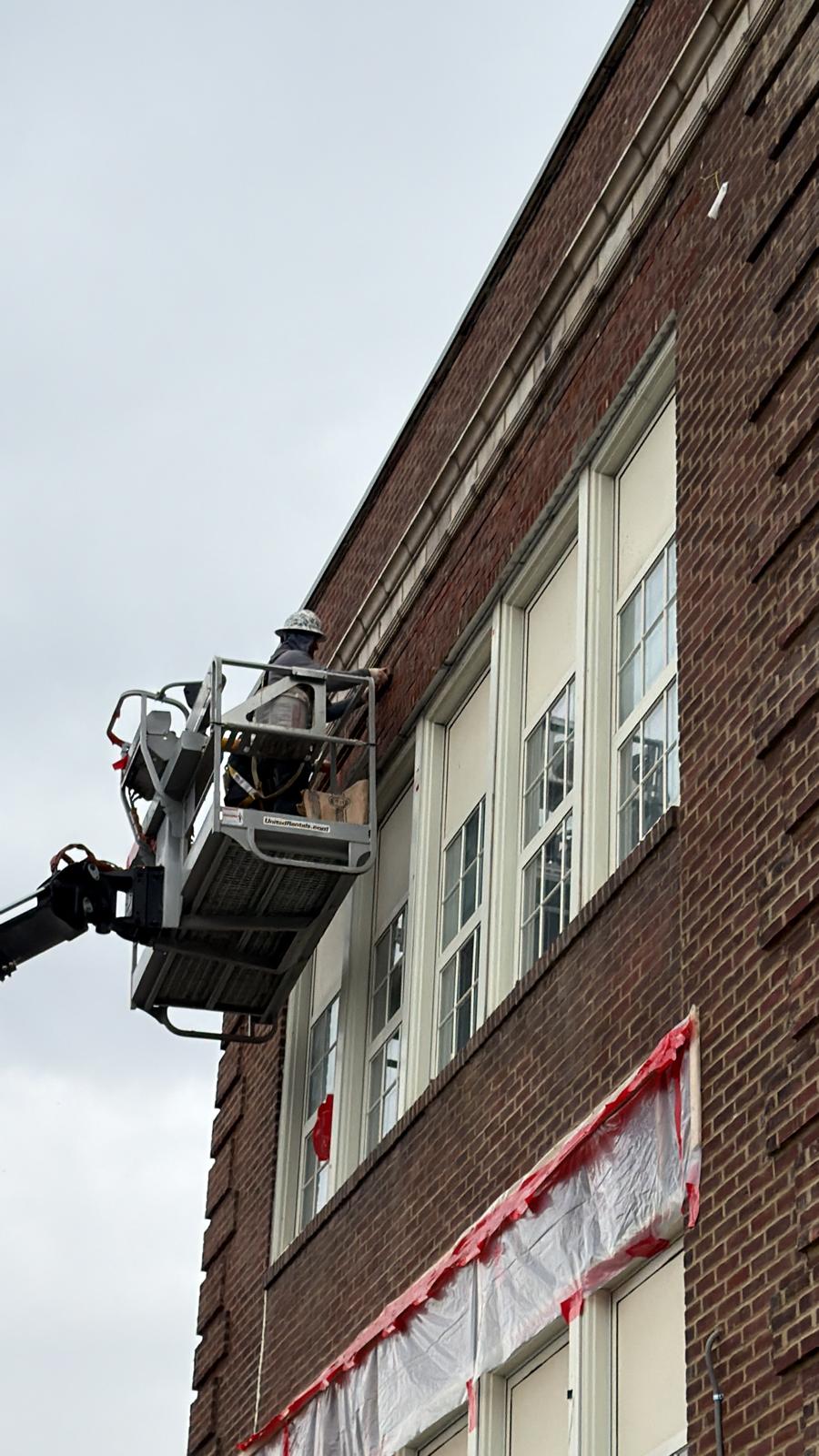
Failed mortar joints on Montclair masonry buildings are raked out and repointed, restoring the masonry's bond and weather resistance where the report flagged joint failure.
Facade deterioration flagged in a Montclair report is restored, including cracked surfaces, damaged masonry and failed joints, so the building face is brought back to a safe, finished condition.
Parapet defects are a common report finding in Montclair. We repair or rebuild parapet walls where they are cracked, leaning or deteriorated, restoring the roof edge to a safe condition.
Balcony slabs, railings and connection points on Montclair buildings are repaired where inspections find deterioration, drainage problems or safety concerns.
Where Montclair reports call for structural steel work, we install or repair reinforcement that supports load-bearing elements and restores the structure's strength.
Waterproofing failures flagged in Montclair reports are corrected with membranes, coatings and joint sealants that keep water out of the structure and its finishes.
Podium decks and parking decks, which the law expressly covers, are repaired in Montclair where concrete, drainage or waterproofing problems are found.
Reserve-study line items for a Montclair building are turned into phased construction projects, sequenced around board approvals, funding and residents who remain in place.
Once repairs are complete, ongoing maintenance programs help Montclair associations look after the restored work and stay ready for the next inspection cycle.
If you are searching for structural integrity law contractors near me in Montclair, NJ, the search usually starts after an inspection report arrives — or after a board realizes a deadline is approaching. Montclair sits in Essex County, and our crews also work in nearby structural-law towns such as Clifton and Passaic, as well as across our wider service areas.
After the report: the repair phase. First, Urbans reviews the engineer’s report with the board and property manager and scopes the work in the order the engineer sets out, so urgent items are not left behind cosmetic ones. Capital projects from a reserve study follow the same path: the study’s line items become a phased construction program, sequenced around board approvals, reserve funding and residents who remain in place, rather than a single disruptive project.
Typical after-report work for a Montclair building includes brick pointing and repointing, exterior and balcony repairs, and ongoing care through annual inspection and maintenance plans once repairs are complete. We serve condo and co-op communities in Essex, Bergen, Passaic, Hudson, Union, Morris, Somerset, Middlesex and Monmouth counties, and we are glad to talk through a Montclair report in a free consultation.
Choosing a contractor for the repair phase is different from choosing an inspector. For a Montclair board, the right partner is one that starts from the engineer’s findings, respects the reserve budget, and keeps residents informed while work is under way. Urbans does not perform inspections, sign engineering reports or produce reserve studies — we are the team that turns those documents into completed repairs.
If your Montclair association is weighing a report, a reserve-study program or a phased repair plan, contact us for a free consultation to discuss scope, sequencing and timing before work begins.
Work starts from the findings the Montclair engineer documented, not from a general checklist. That keeps the repair scope tied to what the report actually requires, so the board can approve work with confidence and track it against the report item by item.
Repairs are sequenced around Montclair residents, common areas, board approvals and reserve budgets. Phasing means urgent structural items come first, while later phases can be scheduled to fit funding and the building’s calendar, keeping disruption as low as practical.
We work alongside the Montclair association’s own engineer during the repair phase, so questions about scope, method or sequence can be answered by the engineer who wrote the report. That coordination keeps the repair work faithful to the report while it is being built.
Completed work is documented for the Montclair association’s records, giving boards a clear account of what was repaired, where, and how it relates to the report and the reserve study. Good records also make the next inspection cycle easier to plan.
Urbans Contractor INC operates with a performance-focused mindset, combining field expertise, structured oversight, and accountable execution to deliver dependable construction and renovation outcomes across every project scope.
Our responsibility continues after project delivery, offering practical guidance and long-term durability solutions when needed.
Every assignment is supported by detailed scheduling, material coordination, and quality verification processes to maintain consistency and reduce risk.
With hands-on experience in exteriors, restoration, roofing, concrete, and interiors, we deliver solutions aligned with technical standards and your property goals.
Explore our completed construction and renovation projects, showcasing quality workmanship, structural expertise, and disciplined project management across residential and commercial properties.
New Jersey’s Structural Integrity Law, S2760/A4384 (P.L. 2023, c.214), was signed on January 8, 2024. It requires covered condominium and co-operative buildings — generally those with concrete, masonry, steel or hybrid load-bearing systems, including podium decks — to be inspected on a set cycle and to maintain capital reserve studies that fund major repairs over 30 years. For a Montclair association, that means inspection findings and reserve funding are part of the same long-term repair program, not separate decisions.
No. S2760 inspections may only be performed by New Jersey-licensed Professional Engineers, working to accepted engineering protocols, with reports filed with the municipal construction official. A contractor cannot sign or file that report. Urbans works alongside the Montclair association’s own engineer during the repair phase, carrying out the corrective work the report calls for.
Once the report lands, the engineer has identified the deficiencies and the association must complete the corrective work within the timeframe the engineer sets. Urbans reviews the report with the board and property manager, scopes and phases the work, and executes it in coordination with the association’s engineer, with completed work documented for the association’s records.
Buildings that were 15 or more years old when the law took effect had their first inspection due by January 8, 2026. After that, re-inspection is due every 10 years for buildings under 20 years old and every 5 years once a building reaches 20 years, and an inspection is also required within 60 days of observable damage. A Montclair board should confirm its own building’s dates with its engineer, since the cycle follows the building’s age.
Capital reserve studies identify the major repair and replacement items a building will face, and the law requires funding for them over 30 years. Those line items become phased construction projects, grouped to fit budgets and approvals, with urgent items first. Once repairs are complete, ongoing care through annual inspection and maintenance plans helps a Montclair association stay ready for the next cycle.