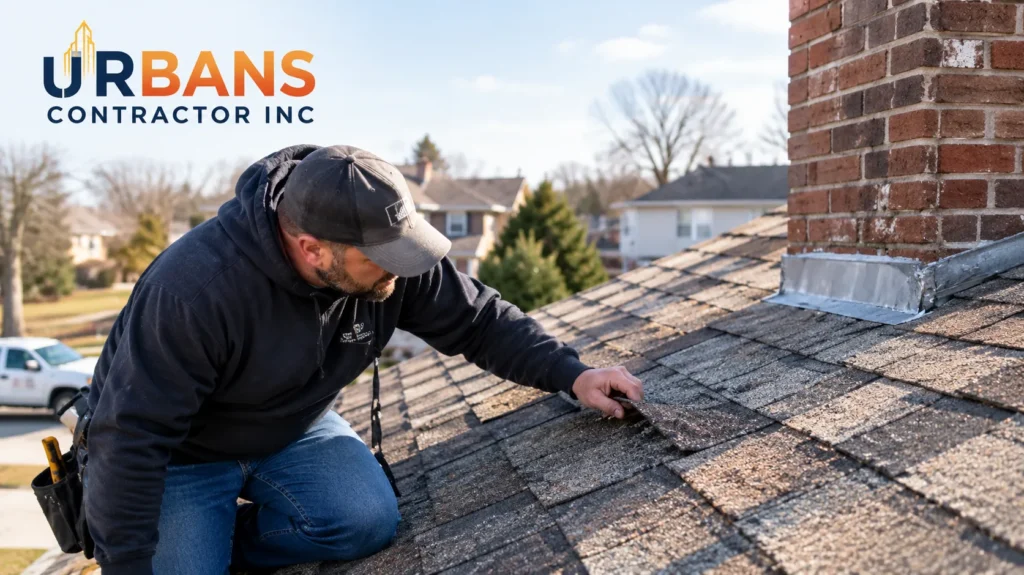
A brown spot on the ceiling after a rainy week. Shingles on the lawn after a windy night. Either way, you end up asking the same thing: should I repair or replace my roof?
Here’s the straight answer. For roof repair or replacement in NJ, three things decide it. How old the roof is, how much of it is damaged, and whether water has reached the wood underneath. Small damage on a fairly young roof? Repair it. Damage all over, leaks that keep coming back, or a roof that’s just worn out? Replace it.
The rest of this roof repair or replacement decision guide explains why, so you’re not just taking a contractor’s word for it.
Roof Repair or Replacement in NJ: The Quick Version
Start with age. If you have an asphalt shingle roof under 15 years old and the problem is small, it’s almost always a repair. Past 20 years, it’s usually a replacement. The stretch between 15 and 20 is the gray zone, and that’s where a proper roof inspection matters most. Two roofs of the same age can be in very different shapes.
Then look at how much is damaged. If it’s under about 30% of the roof, repair makes sense. If it’s more, you’re probably patching a roof that’s failing everywhere, and that’s the roof repair vs replacement NJ homeowners argue about most.
When a Repair Is Enough
Here’s something a lot of people don’t know. Many leaks have nothing to do with the shingles. They start where something goes through the roof, like a chimney, a vent pipe, or a skylight. The metal and sealant around those spots wear out over time.
Flashing repair costs far less than a new roof, and it often ends the leak for good. Good roof leak repair starts with finding where the water really gets in. The stain on your ceiling can be several feet away from the actual hole.
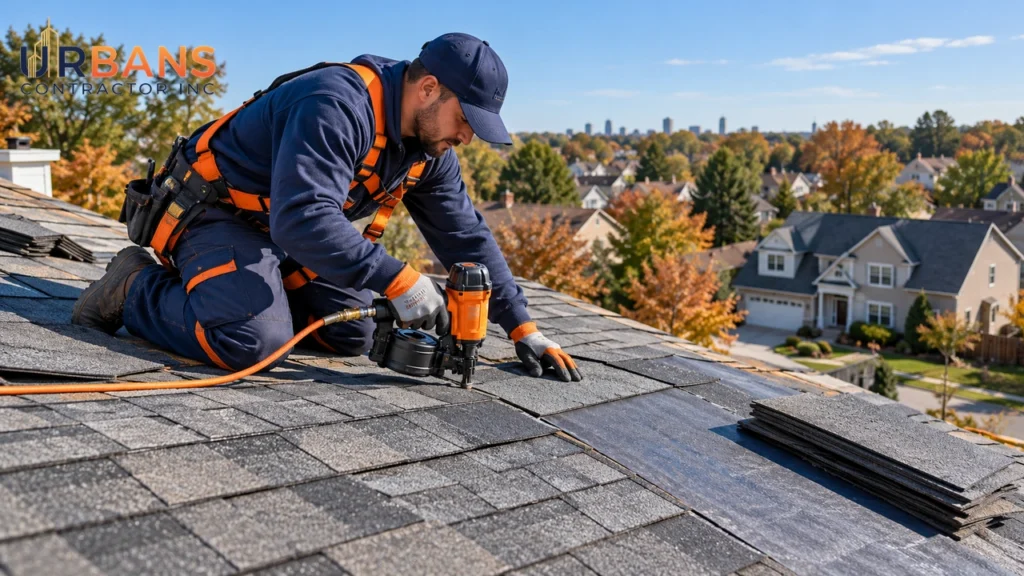
Repair also fits when the wind takes a handful of shingles, or when a branch hits one slope and the rest of the roof looks fine.
Signs It’s Time to Replace
If you’re wondering when to replace a roof in New Jersey, these are the signs that worry us most:
- The roof is 20 years old or more
- You have leaks in more than one place
- Shingles are curling, cracking, or going bald across the roof
- Your gutters are full of grit (that’s granule loss)
- You can see daylight through the boards from the attic
- You’ve already paid for the same repair twice
Then there’s the sagging roof. If the roof line dips, or the roof decking feels soft, water has been getting in for a long time. New shingles can’t fix wood that’s rotted. That job needs a replacement, and the sooner the better.
How Do I Know If My Roof Needs Repair or Replacement?
Roofers love rules of thumb. The most common one is the 30% rule: if more than a third of the roof is damaged, replacing it usually costs less than patching it. Some contractors use 50% instead.
Don’t treat those numbers as law. A roof with rotted wood can need replacing even if the damage looks small from outside. A healthy roof with one bad corner might not. Age, the condition of the decking, and the pattern of leaks tell you more than any percentage.
How Many Leaks Mean You Need a New Roof?
One leak with a clear cause is normally a repair. Three or more leaks in different spots, or the same leak coming back after it was fixed, tells you the whole roof is giving up. At that point, more patches just keep you paying.
Is It Worth Repairing a 20 Year Old Roof?
Usually not. Asphalt shingles tend to last around 20 to 25 years, and by then they’ve gone brittle. A fresh patch next to old shingles often fails within a season or two.
There’s one fair exception. If you plan to replace the roof in a year or so, a small fix to hold things together can make sense.
Flat Roof Repair vs Replacement in NJ
Plenty of NJ townhouses, apartment buildings, and shops have a flat roof, and they don’t fail the way shingle roofs do. So flat roof repair vs replacement NJ owners face needs its own answer.
Repair is often enough when one seam or edge has opened up, the rest of the surface looks good, and the leak is in a small area.
You’re probably past repair if the surface is cracked or bubbled in many places, water sits in the same spots after rain, or the insulation underneath is wet. That’s how you tell when a flat roof is past repair. And if leaks keep returning after fixes, believe them.
On a flat roof, drainage matters as much as the surface. Make sure whoever inspects it looks at both.
Parapet Wall Damage and Roof Leaks
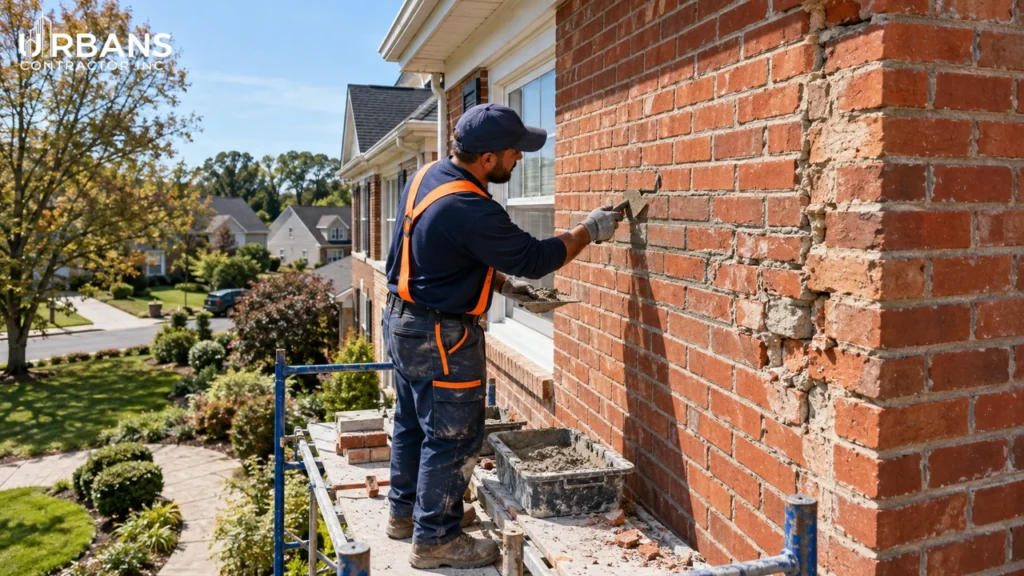
Many flat-roof buildings have a short wall around the edge. That’s the parapet wall, and it’s a sneaky leak spot. When the top cap cracks, the mortar crumbles, or the metal edge pulls loose, water runs behind the wall and into the building.
This is why parapet wall damage and roof leaks go together. If you fix only the roof surface, the leak path can stay wide open. We look at the roof and the parapet as one job. You can read more about our parapet wall repair and roof repair and installation work.
Can You Repair Part of a Roof?
Yes, if the damage is in one area. Just know that new shingles won’t match old ones. On the front of your house, a partial repair can look patchy.
Can You Put a New Roof Over an Old One in NJ?
People ask this a lot, mostly because it sounds cheaper. New Jersey follows the International Residential Code, and that code doesn’t allow a new roof over a roof that already has two layers. The old layers have to come off.
Even with one layer, covering it up hides problems in the wood and can cause trouble with your roof warranty. Most roofers, us included, would rather tear off and start clean.
Do I Need a Permit to Replace a Roof in NJ?
It depends on your town and the job. Replacing a few shingles usually doesn’t need one. A full replacement often does, especially on attached homes, or when decking has to be replaced. Rules change from town to town, so call your local construction office. A good contractor will check this with you before the work starts.
Does Homeowners Insurance Cover Roof Replacement in NJ?
Usually only for sudden damage, like a storm or a fallen tree. Age and normal wear aren’t covered. Take photos before any work begins, and read your policy so there are no surprises.
Why NJ Weather Makes This Harder
Our winters are rough on roofs. Water gets into a tiny crack, freezes, and opens it wider. Add nor’easters, ice dams, and hot summers, and weak spots grow fast. If you have a leak, don’t wait it out through the cold months.
What to Ask Your Contractor
Before you sign anything, ask these:
- What shape is my roof decking in?
- How many years does my roof have left?
- If I repair now, when will I need a replacement anyway?
- What roof warranty comes with each option?
- Does this job need a permit, and who pulls it?
How Urbans Contractor INC Can Help
We’re one of the roofing contractors in New Jersey serving Bergen, Essex, Passaic, Hudson, Union, Morris, Somerset, Middlesex, and Monmouth counties. Every job starts with a free roof inspection and a site visit. After that you get a written scope and estimate, and a final walkthrough before we hand the job over.
Not sure what your roof needs? Contact us or call +1 (929) 713-9816, any day from 9am to 5pm.
Quick FAQ
What is the 30% rule for roofs?
If more than 30% of the roof is damaged, replacing it usually beats patching it.
Do I need a roof inspection first?
Yes. A free roof inspection shows what the roof really needs, since you can’t judge the wood or flashing from the ground.
Should I repair or replace my roof before selling?
Repair it if it’s young with small damage. Replace it if it’s old or leaking.
What happens if I ignore a small roof leak?
It grows. Water damages the wood and ceiling, and a small roof leak repair can turn into a bigger roof repair or replacement in NJ job.
How long does a roof replacement take?
Usually a few days. Size, roof type, and weather can change that.