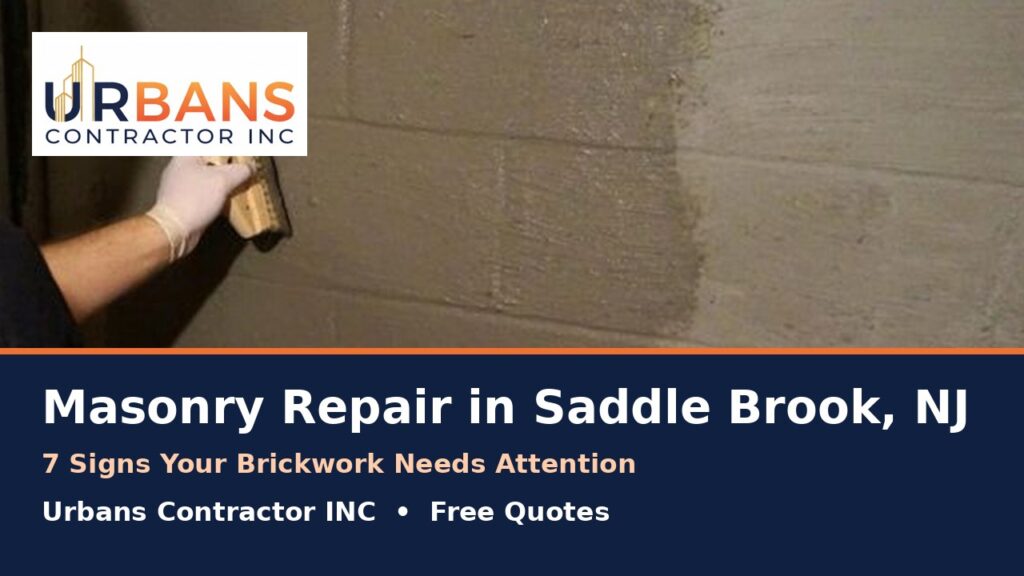
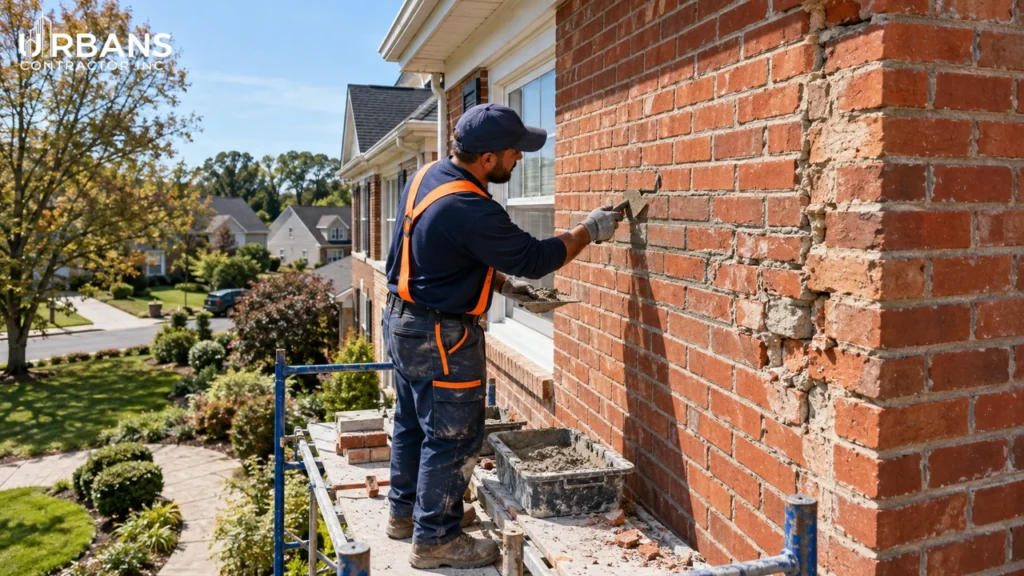
Many older homes in Saddle Brook have brick fronts, chimneys, steps, and garden walls that give Bergen County neighborhoods much of their character. Brick is durable, but it is not maintenance-free. Mortar softens and cracks over time, and New Jersey’s freeze-thaw winters make small openings worse. Water enters a joint, freezes, expands, and widens the gap a little more with each cycle. A problem that looks minor in the fall can leave loose bricks, stains, or damp inside by spring, so a regular look at your brickwork is time well spent.
The seven signs below help you decide what can wait, what needs monitoring, and what should be repaired soon. If you already know you need help, our local team for masonry work in Saddle Brook can inspect the damage and explain the next step in plain terms.
1. Cracked or Stepped Mortar Joints
Mortar joints are often the first place trouble shows. Look for cracks that run along the joints, especially stepped cracks that follow the mortar in a stair pattern up a wall. Hairline cracks can be monitored, but open, crumbling, or missing mortar lets water straight into the wall. If mortar turns to sand or powder when probed gently, it is no longer protecting the brick, and repointing should be planned before the damage spreads further.
2. Spalling or Flaking Bricks
Spalling happens when the face of a brick flakes, peels, or pops off, sometimes leaving the softer inside exposed. It is commonly linked to water absorbed into the brick and then freezing. A single damaged brick near a downspout is a clue to check drainage as well as the wall. Several spalling bricks in one area suggest wider moisture trouble, and replacing those units early can help protect neighboring bricks and the mortar around them.
3. White Efflorescence on the Surface
That chalky white deposit on brick is called efflorescence. It forms when water moves through masonry, picks up salts, and leaves them behind as it dries at the surface. Efflorescence itself can often be brushed off when dry, but it should not be ignored, because it is evidence that water is traveling through the wall. If it keeps returning in the same place, look for a cracked joint, a damaged cap, or another entry point nearby.
4. Bowing or Leaning Wall Sections
A brick wall should look straight when you sight along it. A bulge, bow, or lean, even a subtle one, is more serious than a surface crack. It can point to failed ties, water damage behind the veneer, or movement in the structure supporting the brick. Do not simply patch the face of a bowing section. Have it assessed promptly, and keep people away from any loose area.
5. Water Stains Near the Chimney
Brown or dark stains on a ceiling or wall near a chimney, damp patches after rain, or peeling paint in that area often mean water is getting in around the chimney. Common sources include cracked mortar, worn flashing, or a damaged crown. Because the chimney meets the roof there, it is sensible to check both trades together; homeowners who also need roof work can start with our Saddle Brook roof repair and installation team and ask about the flashing at the same visit.
6. A Crumbling Chimney Crown
The crown is the concrete or mortar cap at the very top of the chimney, shaped to shed water away from the flue and the brick below. Cracks or crumbling in the crown let rain enter from the top down, where it can damage mortar joints, the flue, and interior finishes. From the ground, look for visible cracks, missing chunks, or plants growing at the top. Crown repairs are roof-level work and are best left to professionals with safe access.
7. Gaps Around Lintels and Windows
Steel lintels above windows and doors support the brick over the opening. When a lintel rusts, it can expand and crack the brick above, and gaps can open around window frames and trim. Look for separated caulk, rust staining, and stepped cracks at the corners of openings. Sealing a gap without checking the lintel may trap the real problem. If rooms inside were also affected, homeowners sometimes coordinate the follow-up with our Saddle Brook interior renovation and remodeling contractors.
What a Proper Masonry Repair Involves
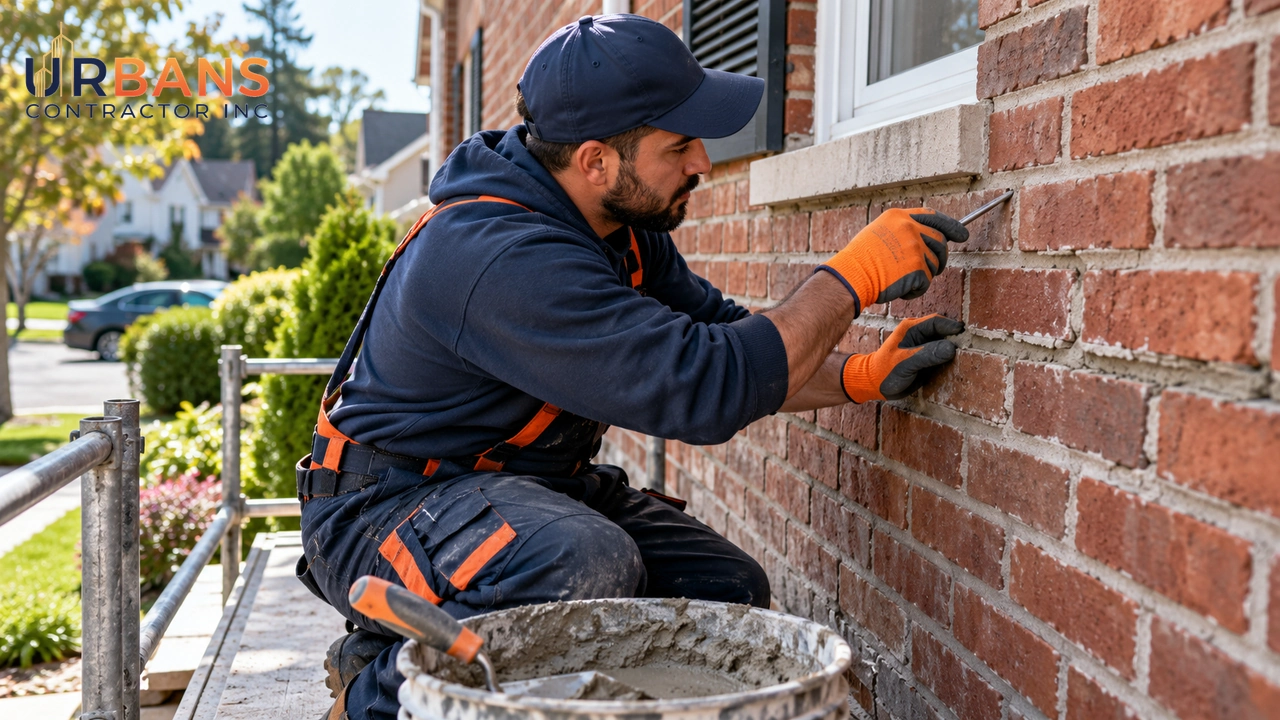
A good repair starts with finding why the damage happened, not just covering it. A mason should inspect the joints, bricks, flashing, caps, and drainage, then explain what needs rebuilding, what needs repointing, and what can be monitored. For broader background, our work as masonry contractors across New Jersey follows that same inspect-first approach on chimneys, walls, steps, and facades.
Repointing means removing damaged mortar to a sound depth and packing in new mortar that suits the existing wall, then finishing the joint to shed water. Damaged bricks or stones should be replaced with units that match the size, color, and texture as closely as practical, and any rusted lintel or failed flashing should be addressed rather than buried. Adjoining flatwork is often better coordinated with our concrete repair specialists in Saddle Brook, and exterior finish areas can be refreshed with help from our Saddle Brook painting and general contracting team once the masonry has cured. Ask also whether breathable waterproofing is suitable after the repairs have cured, and get the reasoning in writing.
When to Call a Professional
Call a professional promptly if a wall is bowing, bricks are loose or falling, a chimney leans, stains are spreading, or you can see daylight through a joint. The same applies if damage returns soon after a patch. Before you hire anyone, our earlier guide on how to hire a reliable contractor in NJ explains the questions, written scope, and checks that help you compare contractors with confidence.

Repointing or Replacement: How to Tell the Difference
Repointing is the right answer when the bricks themselves are still sound but the mortar between them has cracked, crumbled, or washed out. In that case, the failed mortar is removed to a sound depth and replaced with mortar suited to the existing wall, so the bricks are protected again without rebuilding the whole section. That is the focus of our brick pointing and repointing contractors in New Jersey.
Replacement is needed when bricks are spalling deeply, cracked through, loose, or missing, or when a section has bowed. Patching over those bricks, or repointing around them, does not restore their strength. For that kind of work, our brick crack repair and replacement contractors in New Jersey can assess whether a few units or a larger section needs to be rebuilt, and how the new bricks can be matched as closely as practical.
When the damage is not clear, the deciding question is simple: is the problem in the joint, in the brick, or in the structure behind it? That is why an inspection should come before a scope is agreed.
Brick Steps and Chimneys in Saddle Brook
Two places in Saddle Brook homes tend to show trouble early. Brick steps take daily foot traffic, standing water, and repeated freezing, so loose or spalling step bricks and open joints should not be left through another winter. Chimneys are exposed on all sides and at height, so a cracked crown, failed flashing, or open joints can let water in from the top and from the sides at once.
Because chimney damage often involves the crown, the brickwork, and the flashing together, it helps to have those parts checked in one visit. Our chimney repair and rebuilding contractors in New Jersey look at that whole assembly, rather than treating a single crack in isolation.
What Affects the Cost of Masonry Repair?
No two masonry repairs are priced the same, because the price follows the scope, not the symptom alone. The main factors are:
- the size and location of the damaged area, and how easy it is to reach, especially chimney work at height;
- whether the job is repointing, brick replacement, or rebuilding a section;
- matching the mortar and bricks, and whether a lintel, flashing, or crown also needs work;
- whether the water source, such as drainage, a gutter, or flashing, must be corrected first.
For that reason, a reliable figure should follow an inspection, not a phone guess. You can request a free consultation, inspection, and estimate through our contact page, so the scope, materials, and access can be set out in writing before work begins.
What Makes Repointing Last?
Good repointing can last many years, but there is no single lifespan that fits every wall. How long it lasts depends on the mortar match, the condition of the bricks, and whether the water that caused the failure has been stopped. A wall that still takes water from a failed crown, flashing, or downspout will wear new mortar faster than a wall that has been kept dry.
Regular checks help too: clearing blocked drainage, watching for new cracks after winter, and repairing small joints early will usually protect a larger repointing job for longer. That maintenance point is worth raising at the inspection, so you leave with a plan for the wall, not only a repair.
Get a Free Quote in Saddle Brook
If you have noticed any of these signs, Urbans Contractor INC can take a look and talk through your options. Free quotes are available, so call +1 (929) 713-9816 and ask for a masonry repair quote for your Saddle Brook home today.
Urbans Contractor INC is based at 575 North Midland Ave E5, Saddle Brook, NJ 07663, and is open Monday to Sunday, 9am to 5pm. You can also see the towns we cover on our service areas page or read general answers on our FAQs page before you call.
Frequently Asked Questions
How do I know if my mortar needs repointing?
If joints are cracked, crumbling, recessed, or turning to powder, repointing is likely needed. A mason can confirm which areas are letting water in.
Can I repair a few damaged bricks myself?
Small cosmetic touch-ups may be manageable for experienced homeowners, but structural cracks, bowing, chimney work, and lintel damage need professional assessment to find the underlying cause.
What causes white stains on my brick?
Those stains are usually efflorescence, salts left behind when water moves through masonry and dries. Cleaning helps the appearance, but stopping the water source prevents it returning.
Is a cracked chimney crown serious?
It can be, because the crown is meant to shed water from the top of the chimney. Cracks let water in from above, so the crown, joints, and flashing should all be checked.
How is a masonry repair quote prepared?
A contractor will normally inspect the damage, identify the water source, and outline the repair, materials, and access needed in writing, so you understand the scope before work begins.
How long does repointing last?
Repointing can last many years when the mortar matches the wall and the water source has been fixed. If the cause is still active, new joints will fail sooner, so the inspection should address drainage, flashing, and crowns as well as the joints themselves.
What affects the cost of brick repointing?
The main factors are the size of the area, access and height, whether bricks also need replacement, and whether related work such as a lintel, flashing, or crown is needed. An inspection and written scope are the best basis for a figure, and a free consultation can set those out before any work starts.
Do you repair brick steps in Saddle Brook?
Yes, steps are part of the masonry work covered in this guide, along with walls, chimneys, and facades. Loose, spalling, or uneven step bricks should be inspected promptly, because they combine a safety risk with the same freeze-thaw damage that affects walls.
When should a chimney be repaired rather than just repointed?
Repointing alone is enough when the joints have failed but the bricks, crown, and flashing are sound. If the crown is crumbling, bricks are spalling, or flashing has failed, those parts need repair or rebuilding as well, or water will keep entering from above.